
Find the right fireplace for your Autauga County home.
Wood, gas, pellet, and electric fireplace resources for every city and community in Autauga County—from Prattville to Autaugaville. Find the right unit for a mild-winter climate and connect with a trusted local hearth retailer.
Every Project Starts From One of These Five Situations
Mild winters, real wood heritage in Autauga County, Alabama.
Autauga County sits in the humid subtropical belt of central Alabama, climate zone 3A, with a mild, short winter heating season and a winter low average around 36°F. Compare that to Duluth, Minnesota, where winters demand roughly four times the heating effort and wood heat is a survival necessity—here, the cold season is short, usually a handful of weeks between late November and February. That doesn't mean fireplaces aren't valued. Oak and hickory from the surrounding pine-hardwood mix burn dense and long for the occasional cold snap, and pine works well as quick-lighting kindling. Most homes in the county use a fireplace, stove, or insert as a supplemental heat source and gathering point rather than a primary furnace replacement.
What you'll find on this hub: hearth retailers, service technicians, and fuel suppliers serving every community in the county—from the county seat of Prattville and the fast-growing city of Millbrook down to Autaugaville, Marbury, and Billingsley. Pick your fuel below to drill into specifics—local dealers, installation costs, recommended units, and the resources that match your project. Whether you're outfitting a Prattville living room or a rural place off Highway 14, this is the starting point.
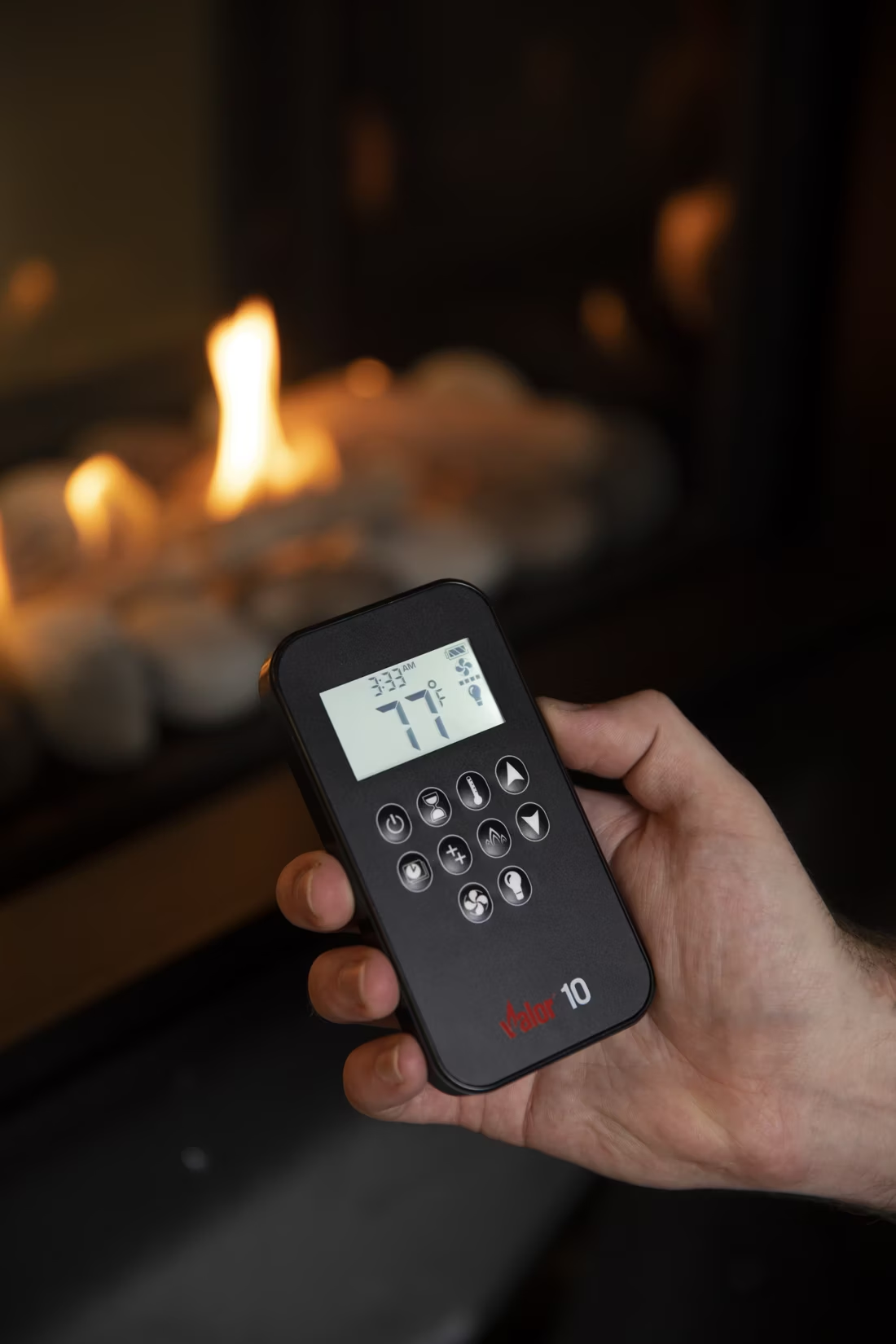
Four fuels. One honest answer for Autauga County.
Three steps. No salesperson until you're ready.
Tell us about your project
Your zip code, your situation, and the fuel you're leaning toward—or let the answers point you to one.
See what's actually available
The brands dealers within 100 miles genuinely carry—real options, never a catalog mirage.
Get your dealer & Project Guide
A trusted local dealer, plus the free Project Guide & Parts List that names every component of the job.
Frequently Asked Questions
Which fuel works best in Autauga County?
It depends on how you plan to use it. With only a short, mild winter heating season and winter lows averaging in the mid-30s, most Autauga County homes don't need a fireplace as their primary heat source—it's a supplemental heater and a gathering point. Wood remains popular for that reason: oak and hickory from local hardwood stands burn hot and long on the coldest nights, and pine lights easily as kindling. Gas—almost always propane in this rural county, since natural gas service is limited outside Prattville and Millbrook—is the convenience choice for instant heat with no wood-hauling. Pellet stoves are a solid middle ground, and Lignetics, Hamer Pellet Fuel, and Greenway Renewable Energy are all stocked by local dealers. Electric fireplaces work well as supplemental warmth in bedrooms, sunrooms, or additions where running a flue isn't practical—a reasonable fit given how few nights actually demand serious heat output here.
Do I need a permit to install a fireplace in Autauga County?
In most cases, yes. New wood stoves, wood inserts, gas fireplaces, gas inserts, gas stoves, and pellet stoves typically require a building permit—through the Autauga County Building Department for unincorporated areas, or through the applicable city building department if you're inside Prattville, Millbrook, or another incorporated town. Gas installations also need a licensed gas-fitter for the propane line connection, since most of the county runs on propane rather than piped natural gas. Electric fireplaces generally don't require a permit unless you're doing a hardwired built-in that adds a new electrical circuit. Most local hearth retailers handle the permitting paperwork as part of the installation, so you typically don't have to navigate it alone.
Are there any wood-burning restrictions in Autauga County?
No—Autauga County has no air quality nonattainment designation and no winter inversion issues like the ones that trigger burn advisories out west. Indoor wood stoves and fireplaces here aren't subject to curtailment days. The one thing to watch for is outdoor burning during drought conditions: the Alabama Forestry Commission occasionally issues temporary outdoor burn bans on debris and yard fires during dry stretches, but that's separate from indoor hearth appliances. New wood stove models sold and installed still need to meet EPA New Source Performance Standards for emissions certification, which is a federal requirement regardless of local air quality status.
Can one local hearth retailer handle all four fuel types?
Many of the larger retailers serving Autauga County—typically the ones based in Prattville or with a wider Montgomery-area service radius—carry wood, gas, pellet, and electric under one roof, which makes it easier to compare options side by side if you're not sure which fuel fits your home. Smaller shops may specialize, often focusing on wood and gas with less emphasis on pellet or electric. If you're cross-shopping fuels, look for a dealer with working showroom displays of more than one type so you can see the real footprint and flame difference before deciding.
How does Autauga County's mild climate change what fireplace makes sense here?
It changes the calculation quite a bit compared to a place like Bozeman, Montana or Buffalo, New York, where a fireplace or stove has to carry the house through months of sustained cold. With a mild, short winter heating season, Autauga County's heating needs are modest by comparison—most units here are sized and used for supplemental heat and ambiance rather than around-the-clock output. That means homeowners can often prioritize aesthetics, glass-front appearance, and ease of use over raw BTU capacity or 20-hour overnight burn times, which matter more in colder-climate installs.
What's the typical cost range for fireplace installation across all fuel types in Autauga County?
Ranges vary by fuel and by how much venting or gas-line work is involved. Wood stove or insert installation: roughly $3,500–$7,500 for a typical setup, more for new masonry chimney construction. Gas fireplace, insert, or stove: roughly $3,500–$8,500, with propane line work as the main cost swing since most of the county runs on propane rather than piped gas. Pellet stove or insert: roughly $3,500–$6,000 for a standard install. Electric fireplace: $200–$2,500 for the unit itself, plus $300–$1,000 in labor for anything beyond a simple plug-and-play placement. See the county + fuel pages above for cost detail tied to specific local retailers.
Can a fireplace actually lower my heating bill?
Yes—by creating a comfort zone. A furnace heats every square foot of the house just to warm the one room you're in; a gas fireplace on low burns roughly a sixth of the gas a typical furnace does. Set the furnace around 55–60 degrees as a baseline, then heat the rooms your family actually uses. Families who heat this way commonly save $20–$60 a month.
Does a fireplace add value to my home?
On average, a fireplace adds back to the home about the same amount you spent installing it. Add the monthly savings from heating the rooms you actually use instead of the whole house—often hundreds of dollars a year—and the value case is strong before you even count what a fire does for how your family uses the room.
How much should I budget for a fireplace?
For an average home—covering the fireplace, the vent pipe, and basic installation—a budget between $3,900 and $5,500 gives you a lot of options across wood, gas, and pellet. By the time you add finish work, gas line, and electrical, the average complete installation lands between $5,000 and $12,000 all-in. In a remodel or new build, a good rule is to put about 2.5% of the total project cost toward the fireplace.
Should the dealer who sells my fireplace also install it?
Ideally, yes. A fireplace project involves vent pipe, gas line, electrical, and often tile or stone. Hire three or four separate trades and you own the liability and the game of telephone between them. One company selling and installing means one accountable party, start to finish—ask about factory training, on-time completion records, and what happens if an inspection fails.
Stove and Fireplace Dealers in Autauga County
Listings include WhyFire partner dealers, dealers we have verified as authorized for the brands we recommend, and established local businesses that carry hearth products. Every listing shows which one it is. The ones marked Preferred run on WhyFire's software, so they can show you real pricing and book your appointment right here. No manufacturer pays for placement. How we verify dealers →
Allgas, Inc. - Montgomery
Apex Gas & Appliance
Brick Acquisition Company
Find your fireplace project in Autauga County.
Pick your fuel below and we'll help you find a trusted local dealer and send a free Project Guide & Parts List—the exact parts, including the vent kit, and a recommended retailer for your home in Autauga County.
Find Your Fireplace →