
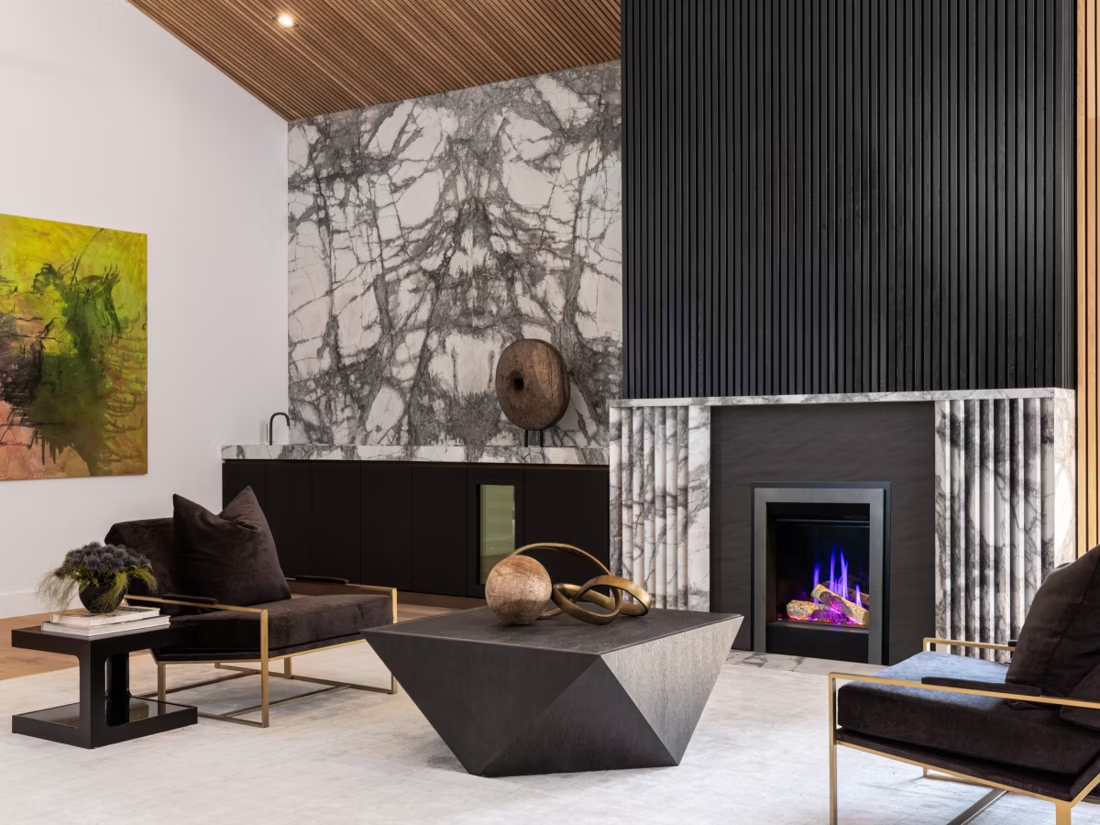
Real fire ambiance, zero venting, in Argo.
Electric heat built for St. Clair County's mild winters—plug it in, mount it, or drop it into an existing firebox, and connect with a trusted local dealer who sizes it right.
Every Project Starts From One of These Five Situations
Mild winters, modern convenience.
Argo sits in climate zone 3A at about 950 feet in St. Clair County, where winter lows average a mild 31°F and the town has a light overall winter heating load—less than a third of what a place like Duluth, MN racks up. That's not a climate that demands a full-time wood-burning setup, and it shows: while older homes here still have open masonry fireplaces built for local oak, pine, and hickory, most households today are looking for something that runs on a switch, not a woodpile.
That's where electric fireplaces fit in. There's no chimney to maintain, no venting to run, and no combustion byproducts to worry about—which makes them a natural choice for the ranch homes and manufactured housing common throughout St. Clair County, as well as for renters who can't modify a wall or roofline. Alabama Power serves Argo at a residential rate around $0.1677 per kWh, and a typical 1,500-watt unit costs roughly a dollar or two a day to run on the heat setting—cheap supplemental warmth on the handful of nights each winter when it actually dips into the 20s.
Three steps. No salesperson until you're ready.
Tell us about your project
Your zip code, your situation, and the fuel you're leaning toward—or let the answers point you to one.
See what's actually available
The brands dealers within 100 miles genuinely carry—real options, never a catalog mirage.
Get your dealer & Project Guide
A trusted local dealer, plus the free Project Guide & Parts List that names every component of the job.
Frequently Asked Questions
How much does it cost to install an electric fireplace in Argo?
Costs vary a lot by unit type. A freestanding or tabletop electric fireplace that simply plugs into an existing outlet runs $150 to $600 for the unit itself, with no installation labor required. A wall-mounted unit, once you factor in a licensed electrician to run a dedicated outlet and mount the bracket, typically lands between $800 and $1,800. A built-in electric insert or full mantel package—the kind that replaces an old open masonry fireplace or gets framed into a wall—usually runs $1,500 to $3,500 once a dedicated 20-amp circuit and any surround carpentry are included. A local dealer can give you a firm number after seeing your space.
Do I need a permit to install an electric fireplace in Argo?
In most cases, no. A plug-in freestanding or wall-mount unit that uses an existing standard outlet doesn't require a permit. Where a permit does come into play is if you're adding a new dedicated circuit for a built-in insert or a larger mantel package—that electrical work typically needs to go through St. Clair County's permitting process, and any licensed electrician handling the circuit will usually pull that permit as part of the job. It's worth asking upfront so it isn't a surprise on the invoice.
What does it actually cost to run an electric fireplace with Alabama Power rates?
At Alabama Power's residential rate of about $0.1677 per kWh, a standard 1,500-watt electric fireplace costs roughly 25 cents an hour to run on the heat setting. Used for a few hours on a chilly evening—say 5 hours—that's about $1.25 a day, or somewhere around $25 to $40 a month if you're running it most evenings through Argo's short heating season. Compare that to gas or wood, and the appeal for occasional ambient use plus light supplemental heat becomes obvious—there's no fuel to buy or store, just the outlet.
Can I put an electric insert into my existing wood-burning fireplace?
Yes, and it's a common project for the older homes around Argo with existing open masonry fireboxes built for oak or pine cordwood. An electric log insert slides into the existing opening, plugs into a nearby outlet (or a new dedicated circuit if the unit calls for more amperage), and gives you flame effect and heat without any chimney work, sweeping, or ash cleanup. It's a straightforward way to keep the look of the original hearth while retiring a fireplace that doesn't get used for actual wood-burning anymore.
What's the difference between an electric insert, wall-mount, and mantel package?
An insert is built to slide into an existing fireplace opening, using the firebox you already have. A wall-mount unit hangs flush on any interior wall like a piece of art—popular in newer construction and additions around St. Clair County that don't have a fireplace at all. A mantel package pairs an electric firebox with a surrounding cabinet or shelf unit and works well as a freestanding focal point in a living room, since it doesn't require any wall modification. Which one fits depends mostly on whether you're retrofitting an old fireplace or starting from a blank wall.
Is an electric fireplace enough heat for Argo winters?
For most homes here, yes—as a supplement, not a primary heat source. With winter lows averaging 31°F and only a light overall winter heating load, Argo doesn't see the sustained sub-freezing stretches that would demand a whole-house electric heating strategy. A 1,500-watt electric fireplace can comfortably take the chill off a 400-square-foot room on a cold morning, working alongside a heat pump or central system for the rest of the house. If you're trying to heat a larger open floor plan, talk to a local dealer about a higher-output built-in model or placing units in more than one room.
Electric vs. gas fireplace—which is right for my Argo home?
Gas fireplaces deliver more real heat output and the look of an actual flame, but they require venting or a gas line and cost more to install. Electric units cost less upfront, need no gas hookup or venting, and can go in almost any room—including interior walls where running a flue isn't practical. For a St. Clair County home where the fireplace is mostly about ambiance and light supplemental warmth on the coldest nights, electric is usually the simpler and more affordable route. For homes wanting a fireplace to genuinely offset heating costs in a colder room, gas is worth a look—a local dealer can walk through both.
What size electric fireplace do I need for my home?
For the ranch-style and manufactured homes common around Argo, a 26- to 36-inch wall-mount or insert is usually enough for a standard living room or den. Larger open-concept spaces or great rooms may call for a 50-inch-plus linear unit or a higher-wattage built-in model. Manufactured homes should also have an electrician confirm the panel has capacity for a dedicated circuit before installing a built-in unit—older mobile home electrical panels in St. Clair County sometimes need an upgrade first. A local dealer will size the unit to your room during a quick in-home look.
Are electric fireplaces safe for renters or manufactured homes in Argo?
Yes—that's actually one of the strongest cases for electric in this area. A plug-in freestanding or wall-mount unit doesn't require any permanent modification, which makes it renter-friendly and reversible if you move. For manufactured and mobile homes throughout St. Clair County, electric avoids the structural and clearance concerns that come with wood or gas venting through a roof or wall. The main thing to confirm is that the home's electrical panel and wiring can handle the unit's draw, especially for built-in models—a licensed electrician can check this in a few minutes.
Do electric fireplaces actually produce heat?
Yes—most put out around 4,800–5,000 BTUs from a standard outlet, which comfortably warms a bedroom, office, or den as a comfort-zone heater. What they won't do is carry a whole house the way wood, gas, or pellet can. Think of electric as ambiance-first with honest supplemental heat: flames on with no heat in July, flames plus warmth in January.
Can I put a TV above my fireplace?
Yes—with an asterisk. Fireplaces are hot and TVs don't like heat. Either put a mantel between them to deflect rising warmth, or choose a fireplace with heat-management technology that creates a cool zone on the wall above—the wall stays around 125 degrees, barely warm, while the room still gets full heat. If you like clean lines and don't want a mantel, heat management is the answer.
What is an in-home preview and do I need one?
It's a visit where a hearth professional measures your space, confirms the model you picked actually works in your home, and walks the specs—framing, gas line, venting, finish work—before anything is ordered. Some details you just can't know until you see the house. Never make a down payment without one; it's the single most-skipped step that burns buyers.
Can I install a fireplace myself?
If you're putting a fire in your house on purpose, it's best to work with an expert. Unless you're genuinely experienced in framing, gas line, vent pipe, and the national code on clearances to combustibles, have a professional do it—and ideally the same company that sells you the fireplace, so warranty, service, and liability all live under one roof.
Nearby Dealers
Hearth shops serving Argo and the surrounding area. Every listing shows whether it is a WhyFire partner, a dealer we have verified as authorized for the brands we recommend, or a local business carrying hearth products. No manufacturer pays for placement. How we verify dealers →
Allgas, Inc. - Gardendale
Southern Fireplaces
Coosa Valley Propane
Colonial Fireplace Company
Allgas, Inc. - Gadsden
Southern Fireplaces
Hawkins Heating & Air Conditioning
Blossman Gas And Appliance
Nomad Homestead Supply
Anniston Fireplace Essa
Anniston Fireplace & Patio
Electric Service in Argo
An electric fireplace's heater draws about 1,500 watts—pennies per hour at local rates.
Alabama Power Co
Find your electric fireplace in Argo.
Tell us a bit about your home and we'll match you with the right electric fireplace, insert, or mantel package—plus a free Project Guide & Parts List and a trusted local dealer to install it.
Find Your Fireplace →